
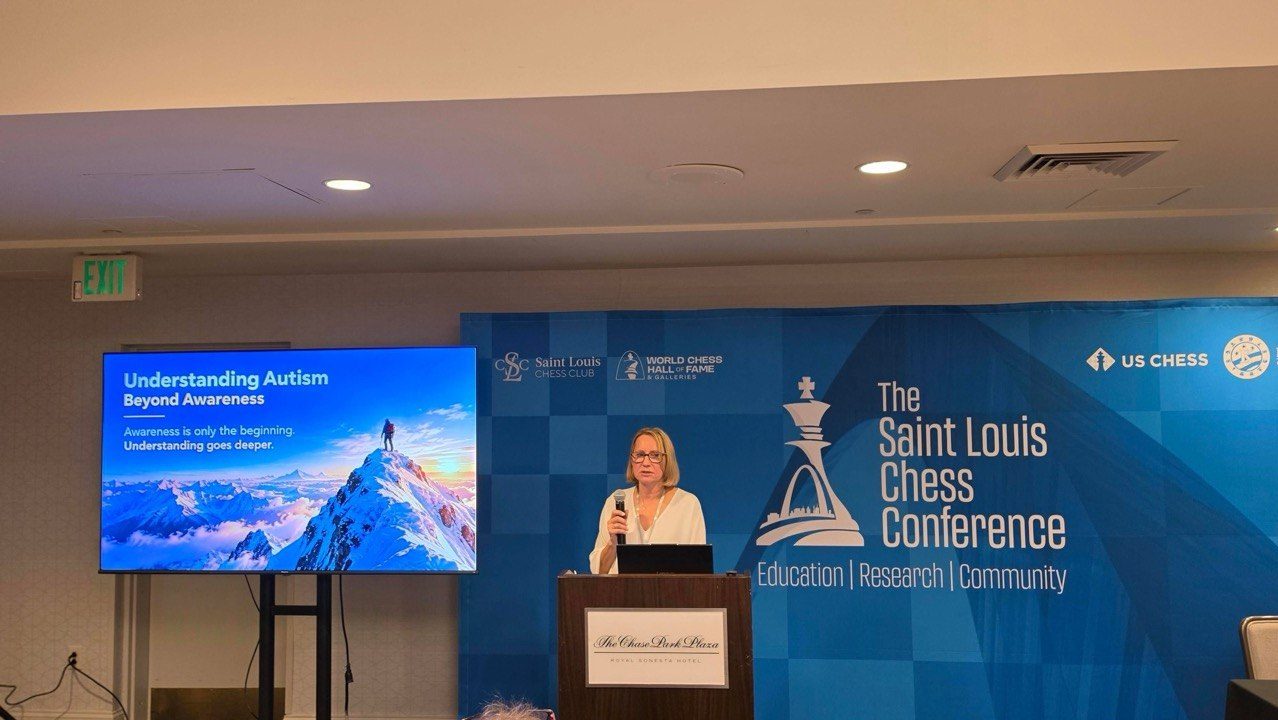
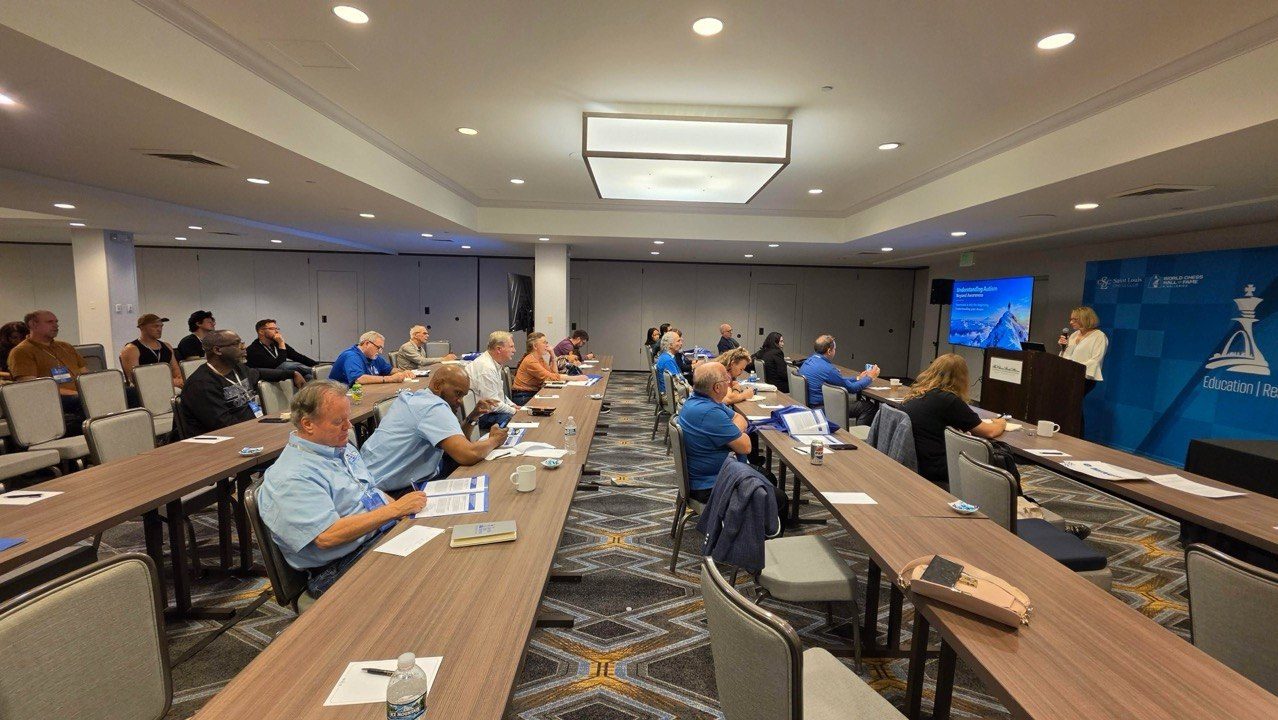
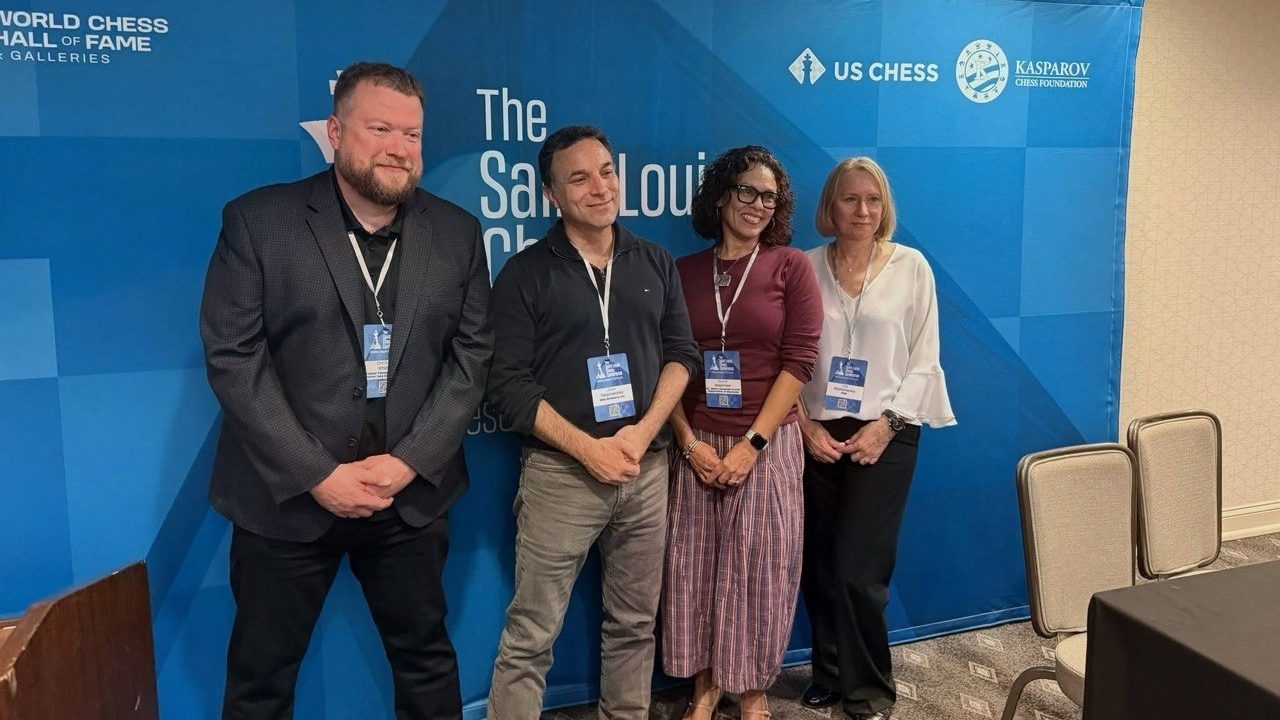
The second Saint Louis Chess Conference, held at the Chase Park Plaza from October 22–24, 2026, has concluded, leaving attendees with a wealth of insights into chess as a tool for social good. While Garry Kasparov’s keynote and the U.S. Chess Hall of Fame inductions drew the headlines, one of the weekend’s most quietly powerful sessions was delivered by Ala Mishchanka, FIDE Infinite Chess Project Ambassador and co-author of the project’s handbook. Her presentation, “FIDE Infinite Chess Project (Chess for Kids with Autism Spectrum),” has since been cited by educators as a defining moment of the conference’s “Chess and Underserved Communities” track.
Organizers described the 2026 gathering as a national convening for those advancing chess through research, education, and policy, building on the inaugural 2024 edition that drew more than 250 participants from 14 countries. This year’s program expanded significantly, featuring marquee sessions on the future of women’s chess, a cross-sport dialogue on athletic performance, and a screening of the documentary Madwoman’s Game. Alongside these headline events, concurrent sessions explored chess in prisons, refugee protection programs, and—most relevant to Mishchanka’s work—the needs of students with special needs. It was within this ecosystem of inclusion-focused programming that the Infinite Chess session found its natural home.
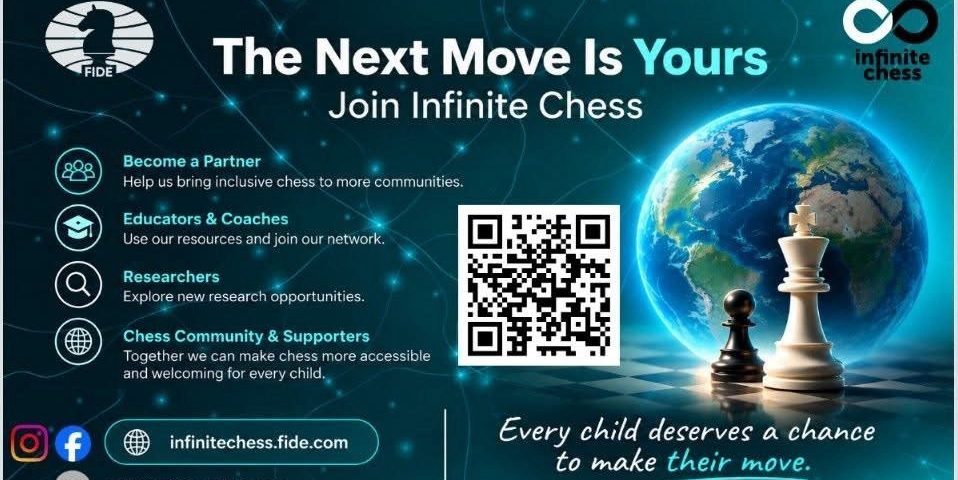
For those who had followed the Infinite Chess Project’s trajectory, Mishchanka’s presentation was both a culmination and a call to action. The project began in 2019 at a private chess school in Belarus, when a parent asked whether his son with autism spectrum disorder could join the lessons. That question, championed by Anastasia Sorokina and Natalia Popova, has since grown into a FIDE-backed initiative spanning 33 countries. Mishchanka, a Special Needs Educational Assistant from Toronto with more than two decades of frontline experience, has been instrumental in translating that grassroots energy into a structured methodology. She co-authored the project’s landmark guide for teachers and parents, now translated into seven languages, and has trained educators across the globe on using chess to support the cognitive, emotional, and social development of children on the autism spectrum.
In Saint Louis, Mishchanka drew on that experience to deliver a session that was equal parts origin story and practical masterclass. Attendees reported that she opened with the project’s humble beginnings—the parent’s question that started it all—before moving into the core teaching strategies that underpin the Infinite Chess approach. She emphasized the often-overlooked strengths that neurodiverse learners bring to the chessboard, and shared real-world outcomes from partner countries where chess has improved socio-emotional well-being and laid a stronger foundation for life skills. The session was not merely a report on past achievements but a roadmap for American educators seeking to build inclusive scholastic chess programs of their own.
Mishchanka’s presentation resonated because it arrived at a moment when the chess-in-education movement is increasingly focused on measurable social impact. FIDE has designated 2026 as the Year of Chess in Education, and the Saint Louis conference’s explicit attention to underserved communities—from refugees to incarcerated populations to students with special needs – signaled a sector-wide shift toward equity. In that context, the Infinite Chess Project stands as a proof of concept: a model that began with a single question and has scaled into a multinational framework with a replicable handbook and a growing network of trained educators.
For Ala Mishchanka, the Saint Louis stage was an opportunity to amplify a message she has carried for years – that chess is not a privilege for the neurotypical, but a birthright for every child who can benefit from its structured, predictable logic. As she has said in previous engagements, the project’s mission is to “unlock the unique potential of these extraordinary children”. In Saint Louis, that mission found a receptive audience and a prominent platform. The conference may have concluded, but the work of Infinite Chess—and the conversations it sparked—is only beginning.