
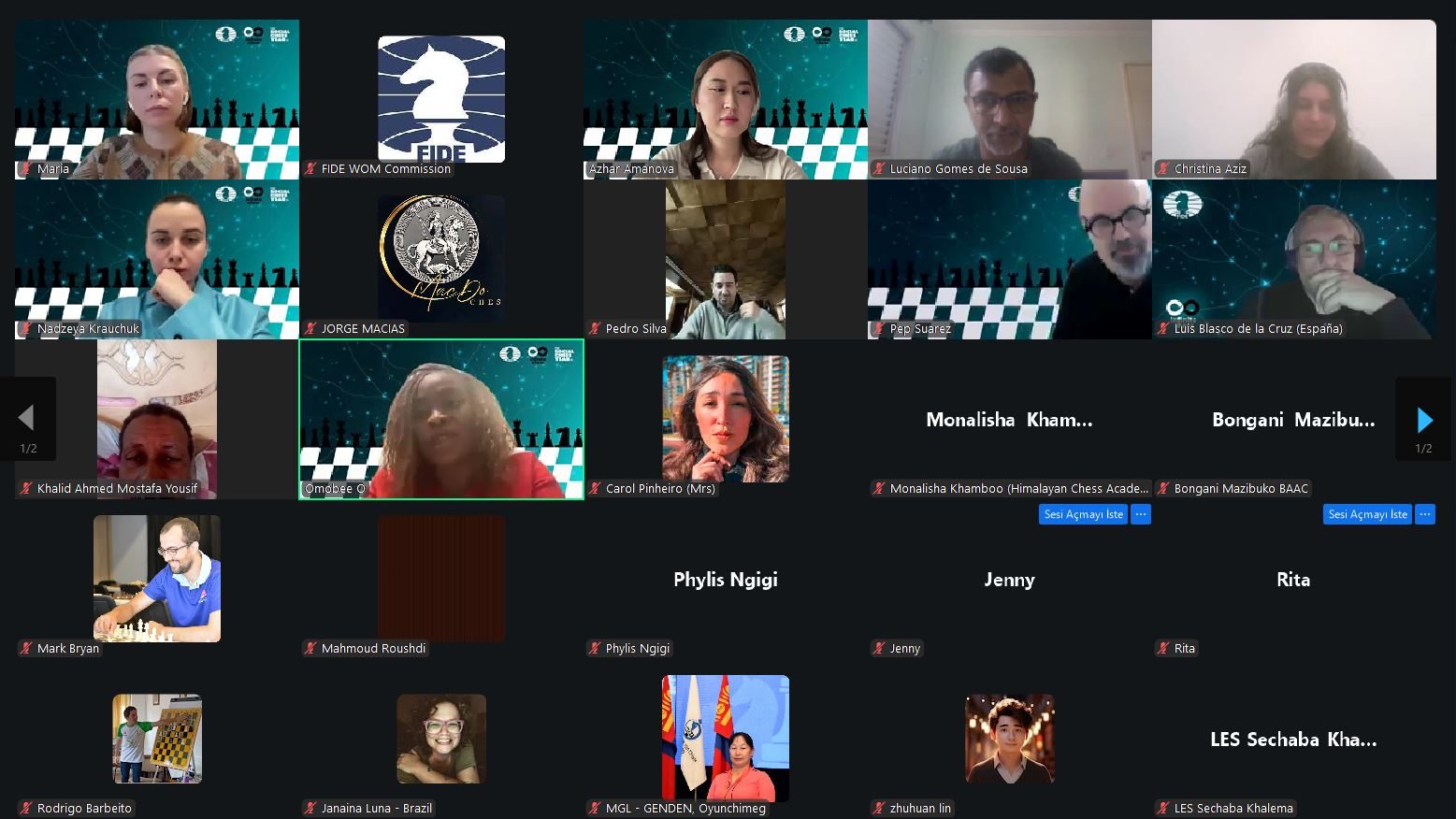
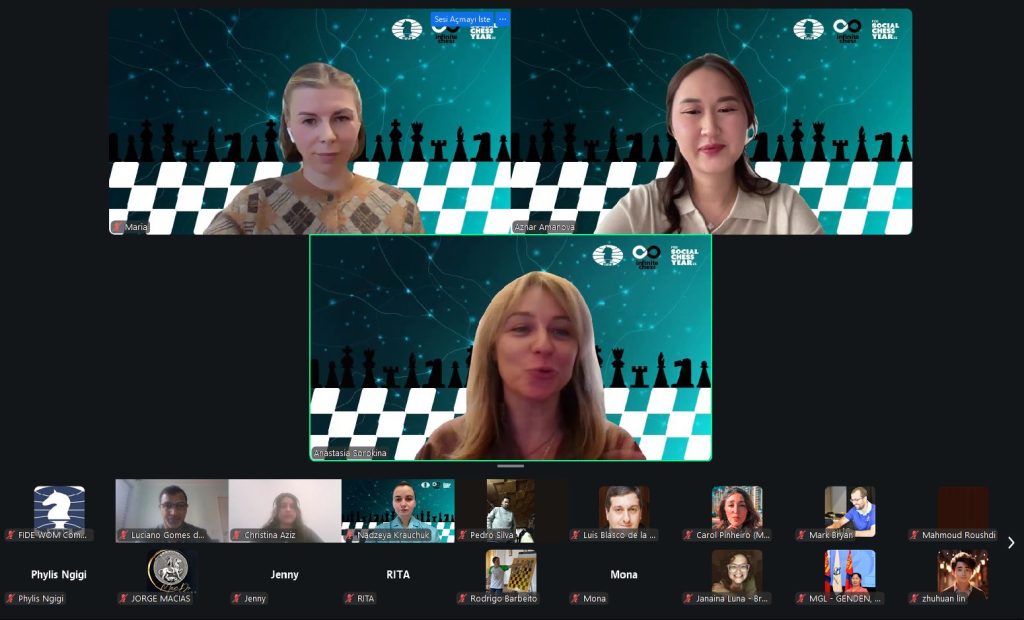
On 20th December, the Infinite Chess project hosted a seminar titled “Checkmate Grants: Unlocking Funding Opportunities.” This insightful online event brought together more than 50 participants, including leaders of social projects, chess educators, NGO representatives, and members of the business sector. The seminar provided valuable knowledge and practical advice to help participants identify, approach, and secure funding for social initiatives.
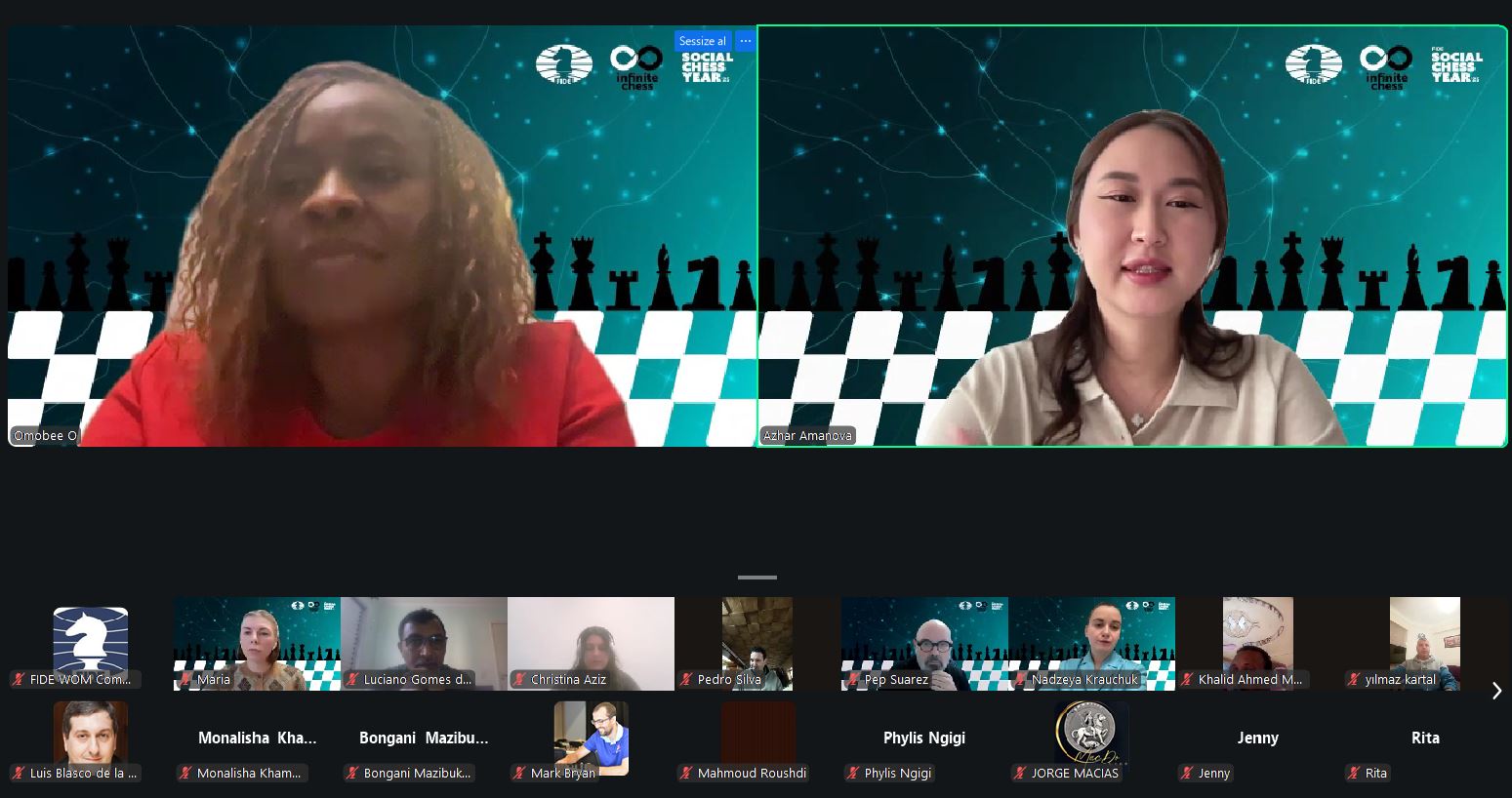
The event opened with inspiring remarks from Anastasia Sorokina, Chair of the FIDE Commission for Women’s chess and Leader of the Infinite Chess project. She highlighted FIDE’s commitment to using chess as a tool for social impact and emphasized the importance of building meaningful partnerships to support this mission.
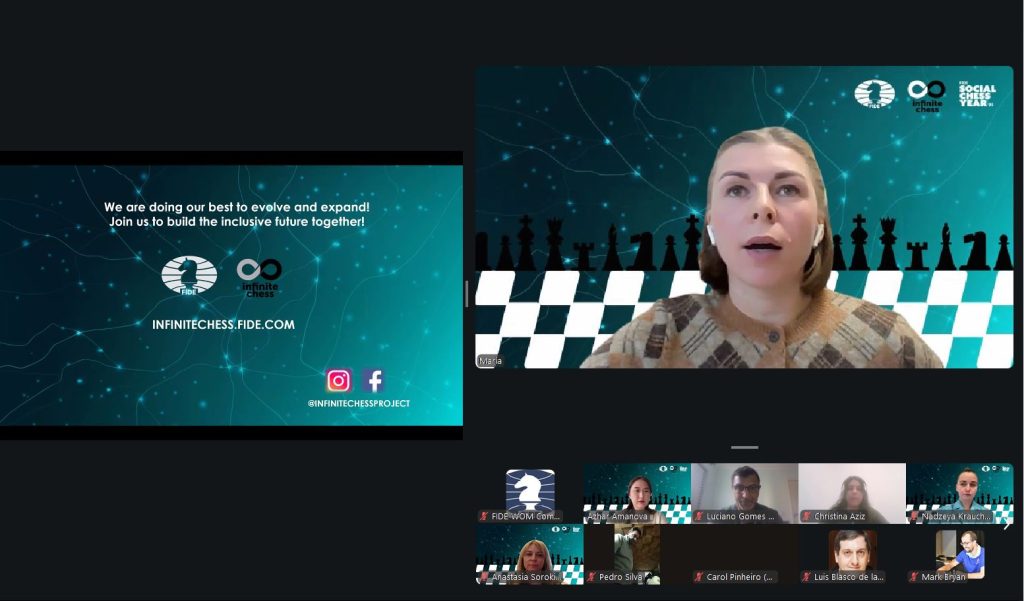
Following this, Maria Tamkovich, Coordinator of the Infinite Chess project, presented a brief roadmap of the initiative and shared plans for its global development in the coming year. Among the key announcements was news regarding the second part of the project Handbook, which is scheduled to be created and translated in 2026.
The business sector’s approach to evaluating funding requests was introduced by Ms. Omoboye Odu, Head of SMEs, Partnerships & Collaborations at ECOBANK NIGERIA LTD. Ms. Odu outlined the priority areas for social initiatives and partnerships that are attractive from a business perspective, explaining the key criteria that guide the bank’s decision-making process.
She emphasized that Ecobank places a strong emphasis on digital education and inclusive learning, noting that these areas are particularly important for the bank’s long-term vision. According to Ms. Odu, initiatives in these fields not only deliver social impact but also align with strategic business goals by fostering a more skilled, technologically-adept population and inclusive economic growth.
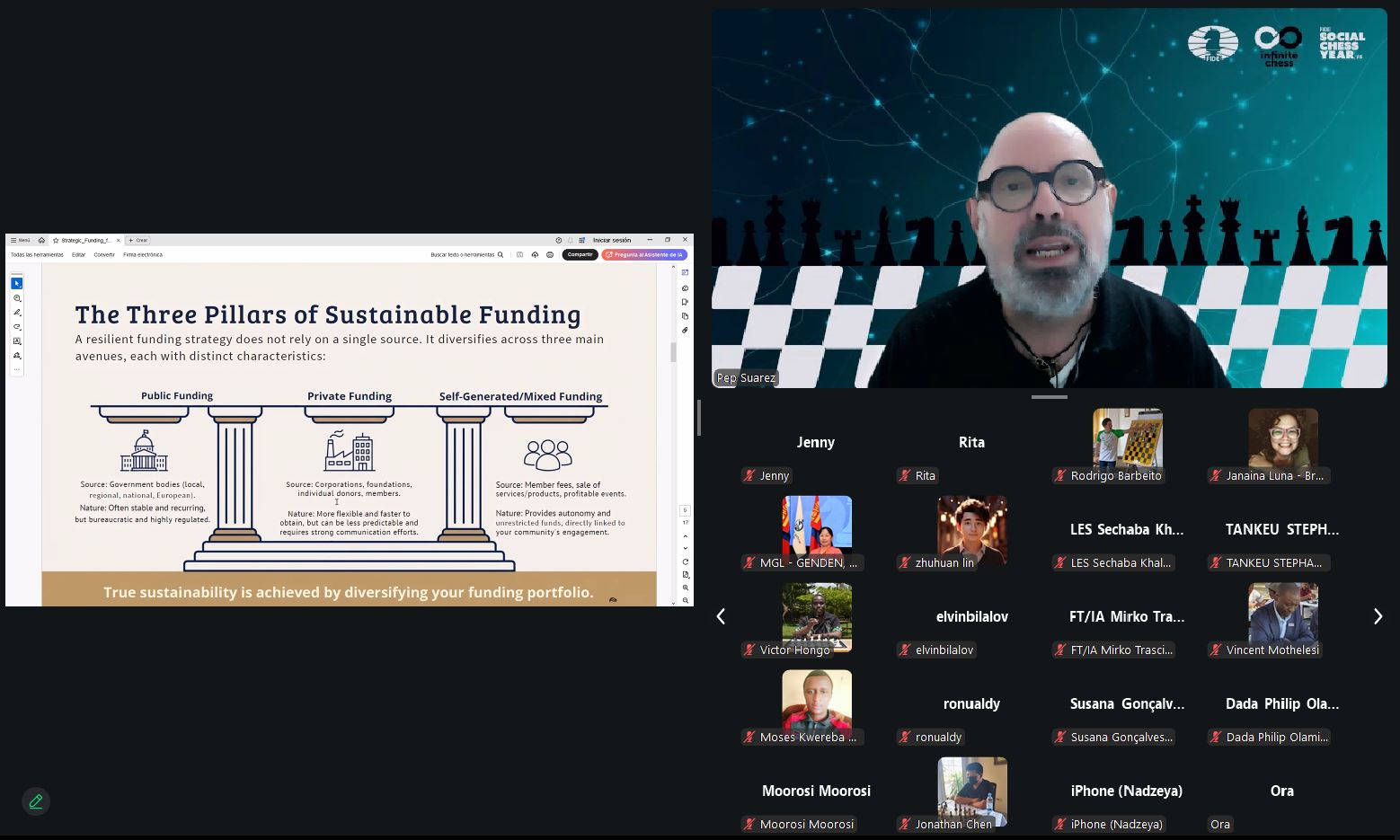
José Francisco Suárez, Director of ChessForEdu and Olimpia Chess, a psychologist, FIDE Senior Trainer, Member of the ECU Education Commission, and an Infinite Chess project partner, guided participants through an exploration of how he connects education, psychology, and chess. He also explained how he secures the funding that supports these projects.
“Securing external funding is a core strategic function that enables an association to move beyond mere survival. The most successful non-profits have shifted their approach to fundraising. It is no longer about asking for money based on need. The new paradigm is strategic partnership,” said Mr. Suárez. “Securing funding is the consequence of strategic and organizational excellence. Resources flow to organizations that can clearly and confidently demonstrate that they know:
- WHAT they do (their programs and services).
- WHY they do it (their mission and the impact they create).
- HOW they do it (their professional capacity and strategic plan).
“Seeking external resources is not about surviving the present. It is about investing in the future,” underlined Mr. Suárez.
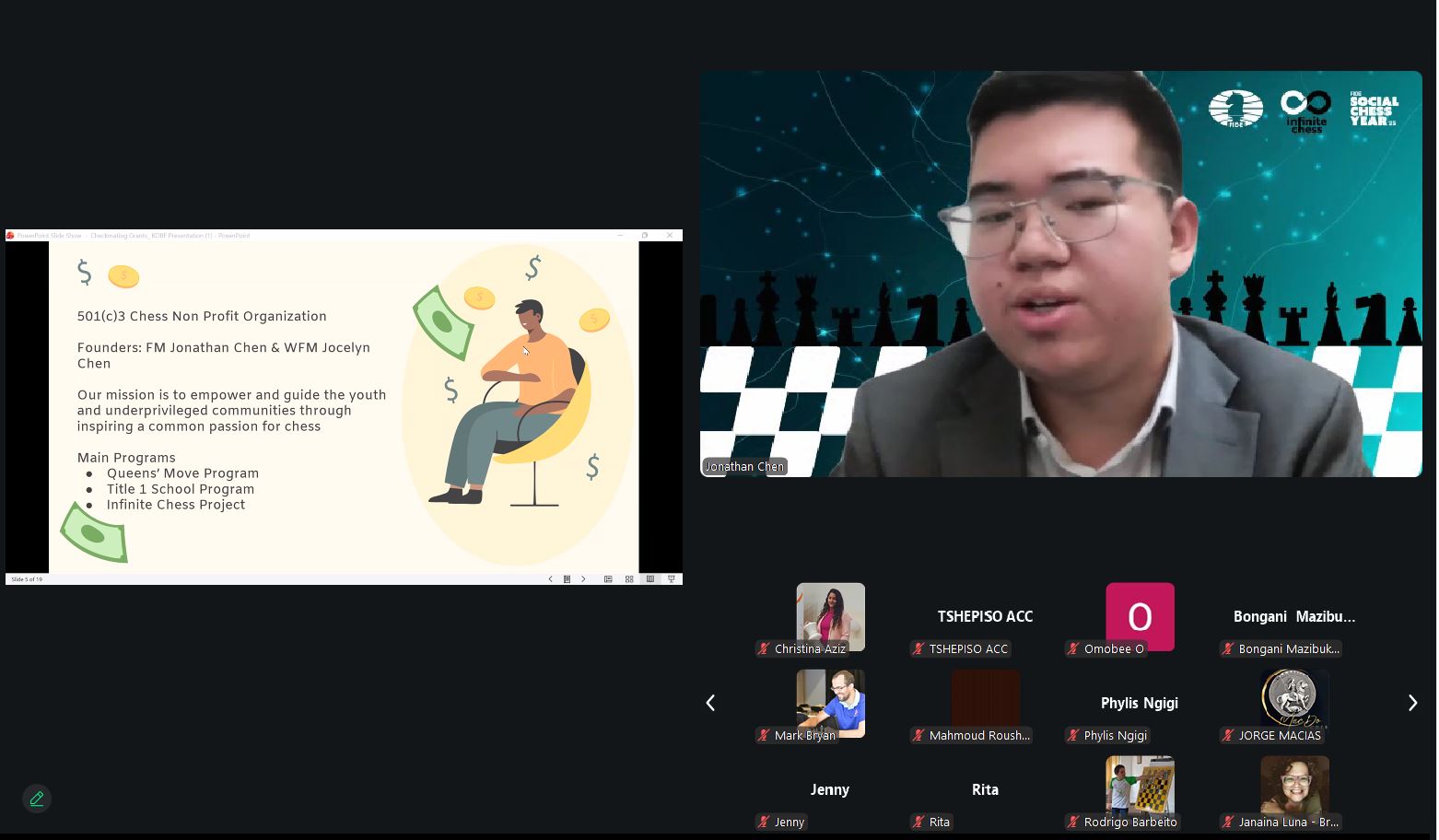
More details and tips on the funding process were shared by Jonathan Chen, Founder and President of the Kindness on Board Foundation. Jonathan has played chess for over 13 years and holds the lifetime FIDE Master title. Having started the Kindness on Board Foundation in December 2023, he became a partner and sponsor of the Infinite Chess Project in September 2025.
Jonathan shared his experience as a young founder, discussing both the opportunities he has accessed and the challenges he has faced while building and funding his social initiatives.
“‘Understand the problem, create an incentive for a solution, demonstrate the capability for success, and show meaningful use of funds—these are the key steps for any social initiative beginning the search for partnerships,’” says Jonathan.
Seminar participants learnt how to craft compelling proposals, build meaningful partnerships, and understand the criteria funders use when selecting projects. Real-life examples of funded initiatives provided practical insights and inspiration, equipping participants with actionable strategies to advance their own work.
Key takeaways received:
- How to identify and research potential funders for social chess projects.
- Practical tips for preparing strong, well-structured grant applications.
- A clear understanding of what funders prioritize when evaluating proposals for impact and sustainability.
- Lessons from case studies of successful chess-related social projects, highlighting effective approaches and common pitfalls to avoid.
A heartfelt thank you to all speakers, attendees, and the Infinite Chess team for making this event a possible.
Recorded video of the seminar.
Join the Movement via #InfiniteChess on social media. Support inclusive chess programs in your community.