
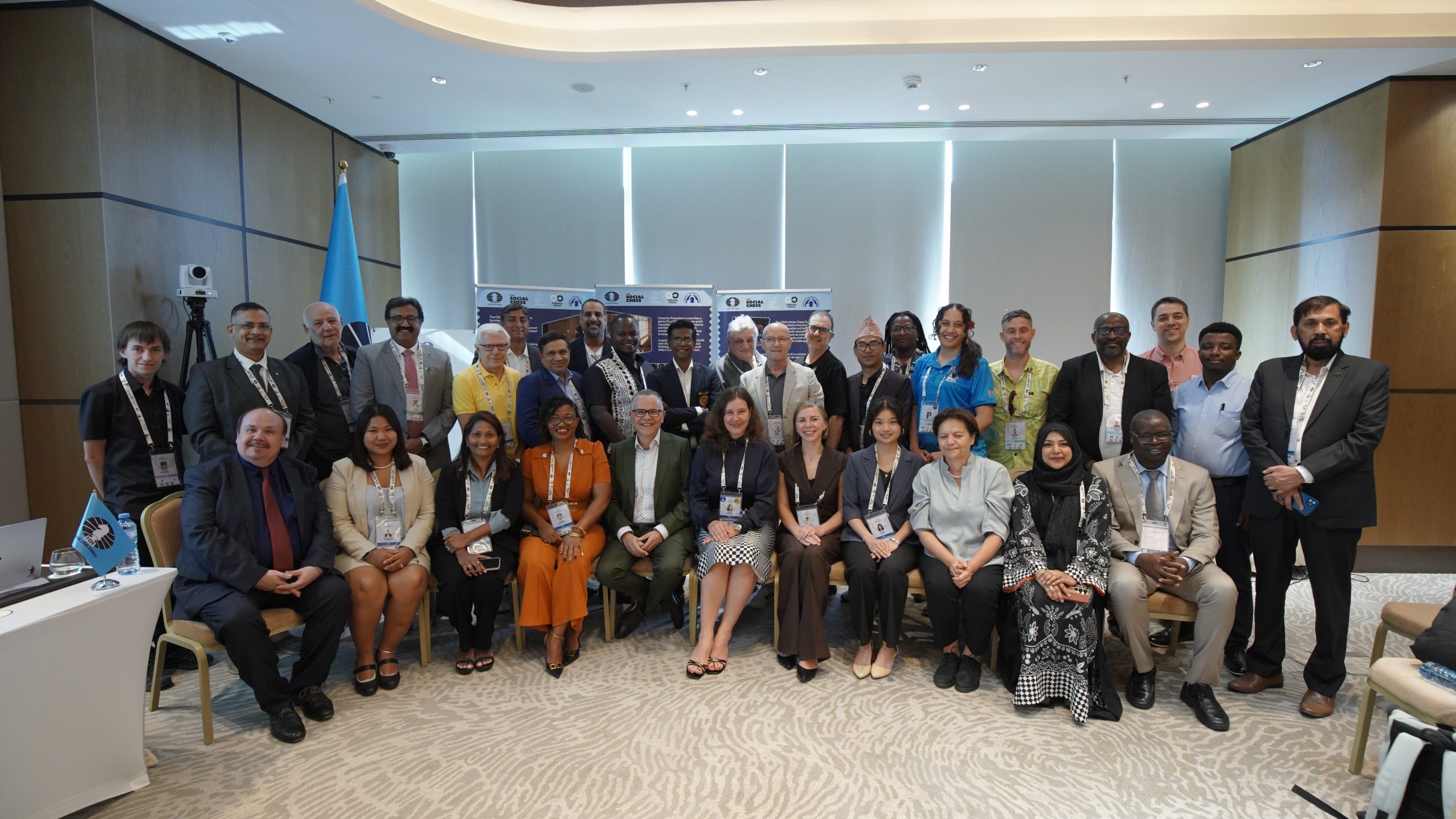
On 23 September 2026, the FIDE Social Commission gathered in the historic city of Samarkand for its annual meeting, held in a hybrid format that brought together members in person at the Silk Road by Minyouh Hotel, online via Zoom, and viewers on the official FIDE YouTube channel. Under the theme “Every move counts” — on the chessboard and on the social chess board — the Commission reviewed a year of significant growth and set priorities for the future.
Among the highlights of the meeting was the presentation of the FIDE Infinite Chess project by Maria Tamkovich, Project Leader and Secretary of the FIDE Social Commission. Her report captured the remarkable journey of a global movement that has grown from a small pilot initiative into a worldwide force for neurodiversity inclusion.
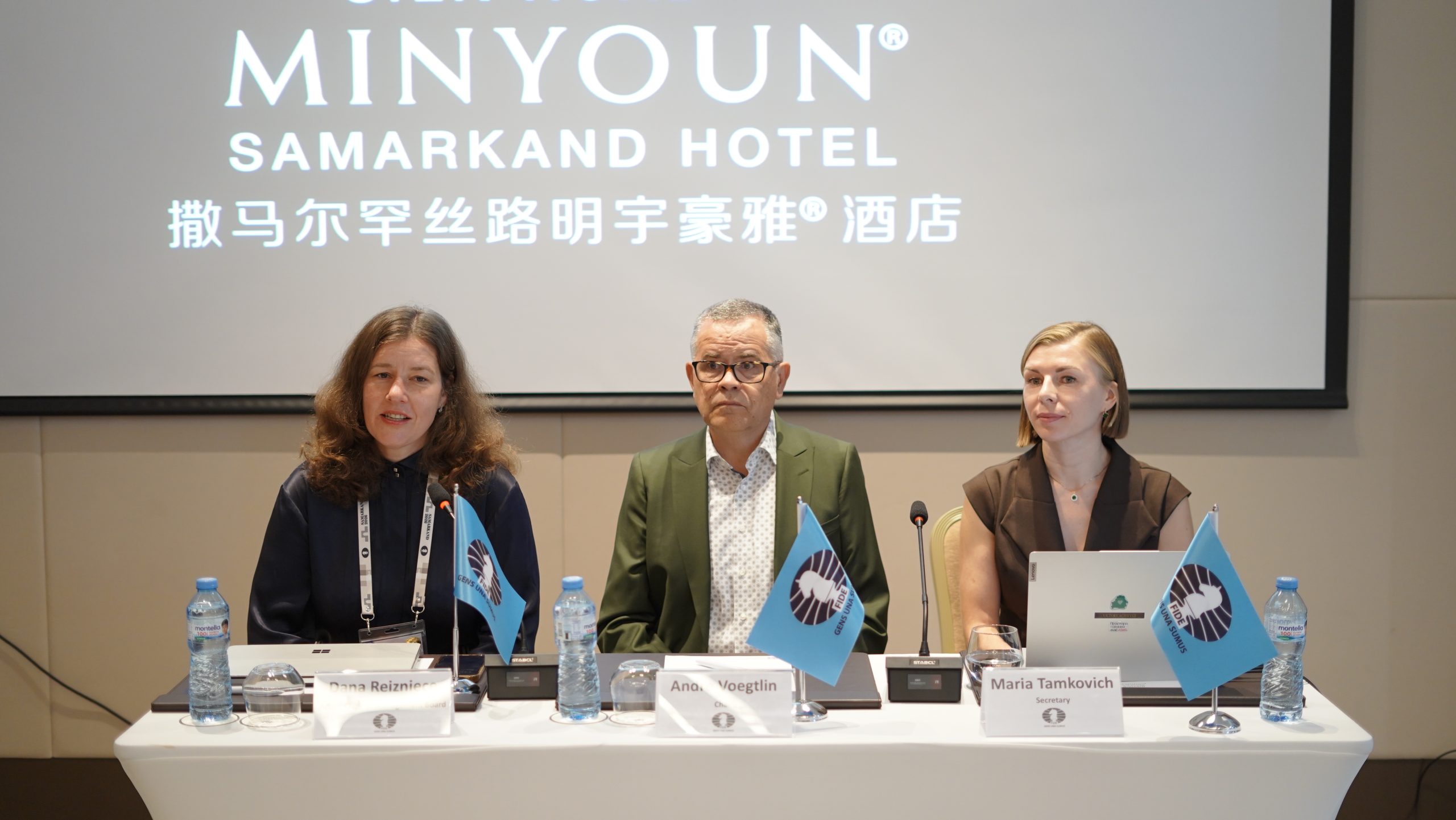
Maria Tamkovich opened her presentation with a message that resonated deeply with the Commission’s mission: “An autistic brain is not a broken, it runs a different operating system.” This powerful reframing of neurodiversity sits at the heart of the Infinite Chess philosophy. Rather than viewing autism through a deficit lens, the project celebrates the unique cognitive strengths of neurodiverse individuals — and uses chess as the bridge to unlock that potential.
The chessboard, Tamkovich explained, offers something rare: logical calm, silent dialogue, and a path from diagnosis to talent. For children on the autism spectrum and those with co-occurring conditions, the structured, predictable nature of chess creates a safe space for focus, connection, and growth. The game transcends verbal communication, allowing players to engage on their own terms and discover abilities that might otherwise go unrecognized.
The Infinite Chess project is now active in 28 countries, serving over 270 children with autism and co-occurring conditions. What began in 2019 as a small pilot at a private chess school in Belarus — inspired by a simple question from a parent asking whether his son with ASD could join chess lessons — has blossomed into an international movement. Under the strategic oversight of Dana Reizniece, Acting Chair of the FIDE Management Board, the project has grown into a global family united by a shared belief in the power of chess to transform lives.
The project’s impact is powered by a comprehensive educational framework. The Infinite Chess Handbook — a unique methodological guide for teachers and parents — is now available in seven languages, with the second part ready for translation. This handbook represents years of on-the-ground expertise, offering structured, step-by-step guidance for integrating chess into special education settings.
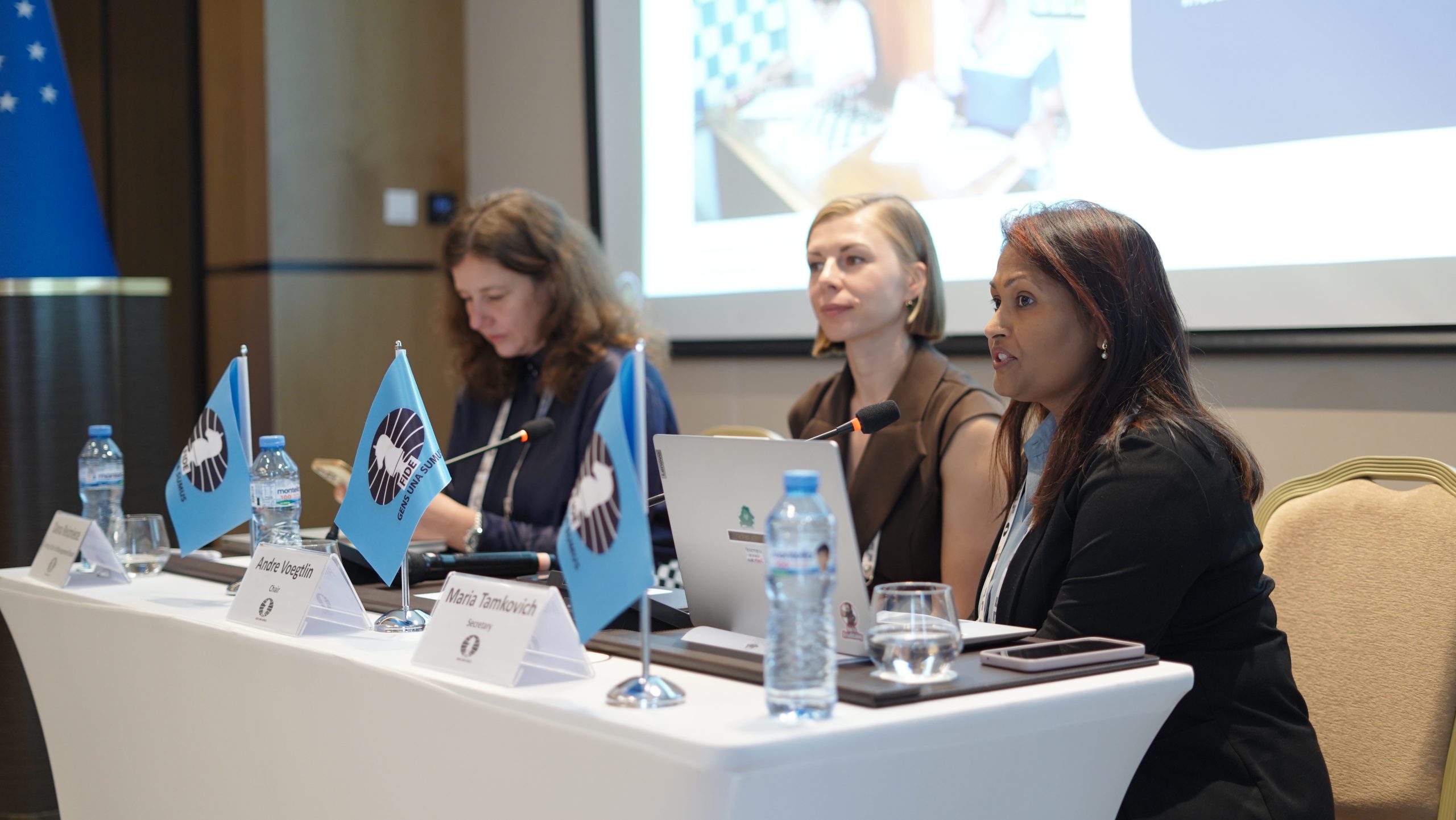
The past year has been one of remarkable visibility and recognition for Infinite Chess. In 2026, the project was presented at the United Nations in Geneva, bringing its message of neurodiversity inclusion to the international stage. It also took center stage at the inaugural World Youth Leadership Forum in Chicago, where young leaders from around the globe learned about the transformative potential of chess for social impact.
These high-profile platforms have amplified the project’s reach and attracted new partners. As Tamkovich announced in Samarkand, new partners from Trinidad and Tobago, Singapore, Switzerland, Malta, and Malawi will join the Infinite Chess family in the coming year. Each new country brings fresh perspectives, dedicated educators, and a shared commitment to ensuring that no child is left on the sidelines.
The Samarkand presentation was more than a progress report — it was a call to action. With 28 countries active, a handbook in seven languages, and a growing network of partners, Infinite Chess is poised for its most ambitious chapter yet. The project continues to demonstrate that when we shift our perspective on neurodiversity, we open doors to talent, connection, and dignity that benefit us all.
As the FIDE Social Commission meeting concluded, one message echoed clearly: on the infinite chessboard of human potential, every move truly counts. The Infinite Chess project invites federations, educators, and advocates worldwide to join this growing movement — because when we make space for every kind of mind, we all win.